
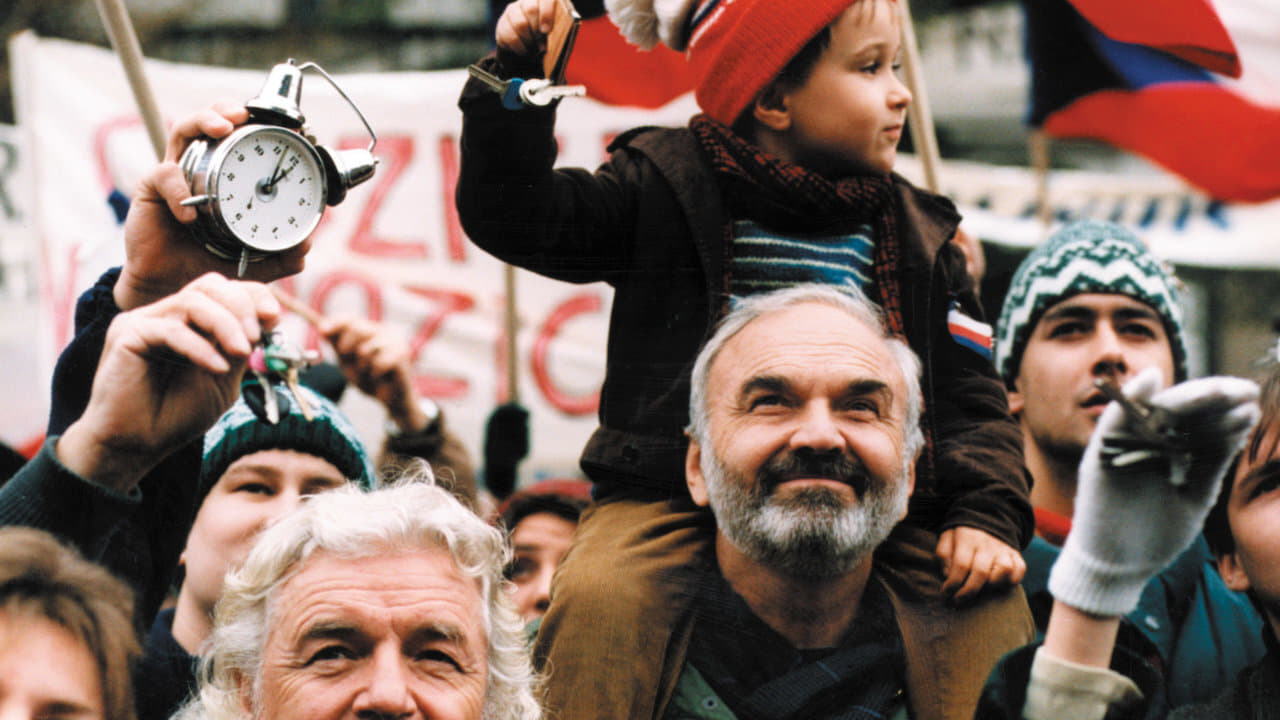
 Kolya1996 · ★ 7.4
Bombuj: Czech and Slovak films, from Kolya, Cosy Dens and The Firemen's Ball to My Sweet Little Village, Lemonade Joe and The Teacher, and where to watch them
184 films from Czechia and Slovakia, 1950 to 2026, chosen for the whole household.


Czech and Slovak films for the whole household: the Bombuj guide
Bombuj: Czech and Slovak films, from Kolya, Cosy Dens and The Firemen's Ball to My Sweet Little Village, Lemonade Joe and The Teacher
Two small countries in the middle of Europe share one of the most distinctive film traditions in the world. Czech and Slovak cinema has a tone that is recognised at once: a dry, affectionate humour about ordinary people, a suspicion of anyone who gives orders, and a habit of finding the comic and the sad in the same scene. In the 1960s it produced a New Wave that won prizes on every continent; in the 1970s and 1980s, comedies that the whole nation still quotes; and since the 1990s, an Academy Award and a steady run of popular films. Bombuj is a guide to 184 of them, made between 1950 and 2026, 159 in Czech and 25 in Slovak. Each has its own page, its story, its director and cast, and a Watch now button that leads to the official services carrying it in your country.
The catalogue has been chosen for the whole household. Every film was read through by hand, and the selection favours comedies, village stories, musicals, family films, fairy tales and the gentler classics. Crime films, horror, films of the battlefield and titles made strictly for adults were left out. What remains is a cinema of weekend cottages and village football, of evening classes and brass bands, of fathers, sons and neighbours, told with a wit that survives translation remarkably well.
The numbers give a first idea of the shape. One hundred and forty-five of the films are comedies, seventy-three are dramas and forty-two are romances; seventy-eight turn on a family and forty-seven are set in a village or at a country cottage. Eighty-four are classics made before 1990, thirty of them from the decade of the New Wave, and forty-six have appeared since 2018. Twenty-seven carry a score of 7.2 or higher from the viewers of TMDB.
A first-time visitor can begin with any of six films. Kolya is the story of a Prague cellist and a small Russian boy, and won the Academy Award. Cosy Dens follows two families in one house through the year before the summer of 1968. The Firemen's Ball is a comedy by Miloš Forman about a village celebration that goes quietly and completely wrong. My Sweet Little Village is the best loved of all Czech village comedies. Lemonade Joe is a musical parody of the American western, and The Teacher is a recent Slovak film about a classroom in the 1980s.
How the collection is arranged
Bombuj is black and grey, and its brightest colour is white. A dark strip at the top carries a line of text and links to My List and Help. Under it runs the menu bar, in capital letters on grey: Films, Comedy, Classics, New Wave, Slovakia and A-Z, with a quick-search field at the right. The home page opens with a wide still from one of the highest-rated films, its title set over the foot of the picture, and then a series of grey bars, each with a lighter tab at the left and an All link at the right: Popular, Newest, Top overall, Classics and From Slovakia. Beneath each bar the films stand five to a row in bordered cards, with the name of the film centred under its poster.
The lists are the main way through the catalogue. Comedy, Drama, Romance and Family sort the films by kind. The New Wave holds the thirty films of the years 1960 to 1970, Classics everything made before 1990, and Slovakia the films in Slovak. Village and cottage, Music, Sport and Fantasy and fairy tales sort them by subject, three lists divide the later films by year, and Top rated has the twenty-seven with the strongest scores.
Each film has a page of its own, built to one plan. The poster is at the left; beside it stand the English title, the original Czech or Slovak title, and small labels for the year, the length and the score. A paragraph gives the story, and the director and principal actors follow. The Watch now button comes next, with a menu for choosing a country that Bombuj keeps for later visits; pressing it opens JustWatch at the list of services where the film can be streamed, rented or bought.
The New Wave
Between about 1963 and 1969 a group of young directors, most of them graduates of the Prague film school, made a series of films unlike anything their country had produced before. They used amateur actors beside professionals, filmed in real flats and dance halls, and looked at everyday life with an eye that was at once tender and merciless. Thirty films in the catalogue come from that decade, and the three by Miloš Forman are the place to begin.
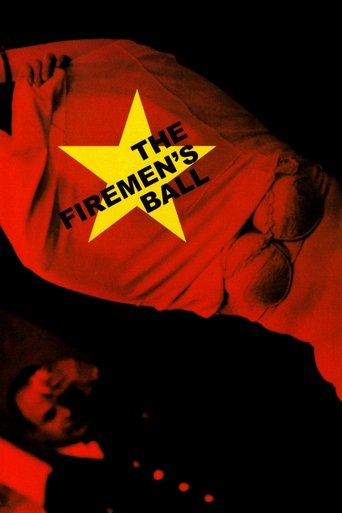
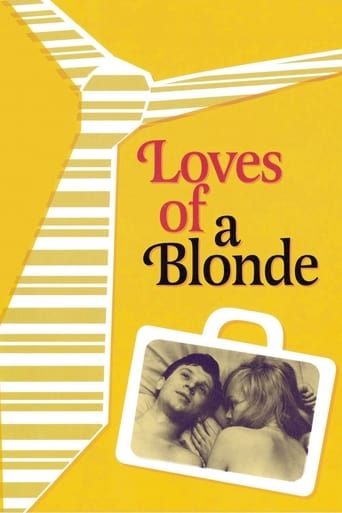
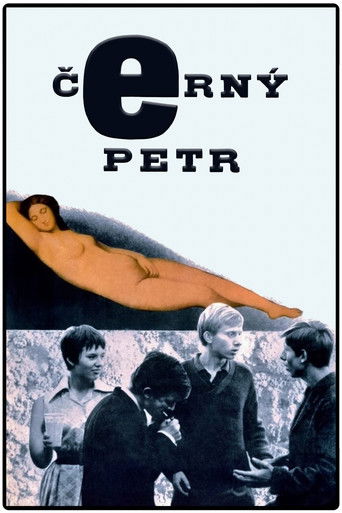
Black Peter (1964), his first feature, follows a boy of sixteen through his first days at work in a self-service shop, where his job is to watch for customers who forget to pay, and through evenings of lectures from his father. Loves of a Blonde (1965) is set in a factory town where the young women outnumber the men by sixteen to one, so that the management arranges a dance with a visiting regiment of reservists; Andula, the blonde of the title, meets a pianist from Prague instead. It was nominated for an Academy Award and remains one of the most charming films of the 1960s. The Firemen's Ball (1967) is Forman's masterpiece of comic observation: the volunteer firemen of a small town hold their annual ball, with a raffle, a beauty contest and a presentation to their old chairman, and every item on the programme slides gently out of control. It too was nominated for an Academy Award, and it was the last film Forman made at home.
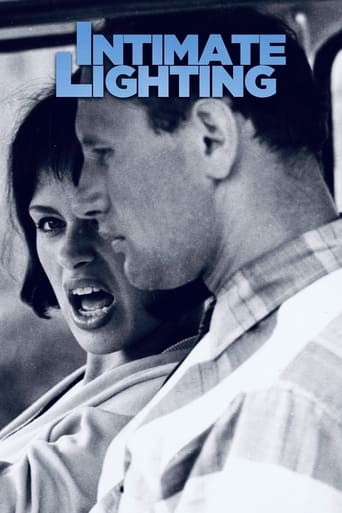
Ivan Passer, who wrote those films with Forman, directed one feature of his own before leaving the country, and it is perfect. Intimate Lighting (1965) brings a cellist from a Prague orchestra to the country house of an old friend who now runs a village music school; they play a quartet with the friend's father and the local chemist, eat a very long lunch, and sit up late wondering how their lives turned out. Very little happens, and every minute is a pleasure. Jiří Menzel, the youngest of the group, is represented from this period by Capricious Summer (1968), in which three middle-aged friends at a riverside bathing place in a rainy summer are thrown into confusion by the arrival of a travelling tightrope walker and his assistant.
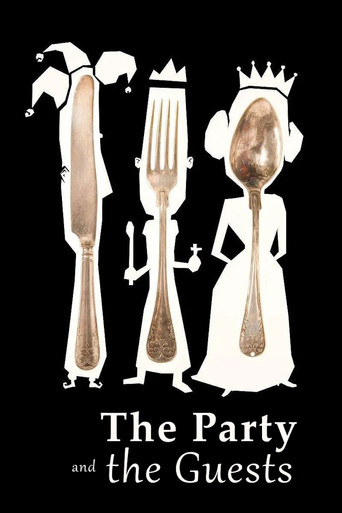
Pearls of the Deep (1966) was the manifesto of the movement: five directors each filmed a short story by the writer Bohumil Hrabal, whose talkative, unstoppable characters suited them all. Věra Chytilová, the leading woman among them, is represented by three early works, Ceiling (1962), A Bagful of Fleas (1963) and Something Different (1963), which sets the life of a housewife beside the training of a real champion gymnast, and by the later Panelstory or Birth of a Community (1981), a comedy of life on an unfinished housing estate. The Party and the Guests (1966), by Jan Němec, is a parable about a picnic that becomes a banquet nobody is allowed to leave, and Martyrs of Love (1967) is three dreamlike tales of shy people in love.
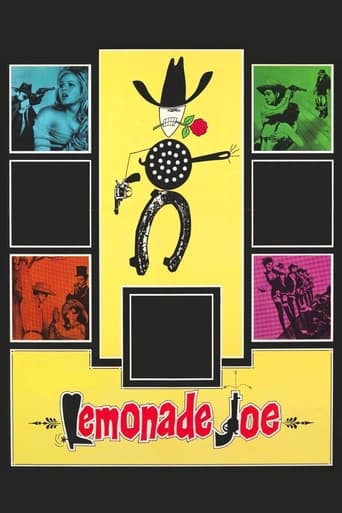
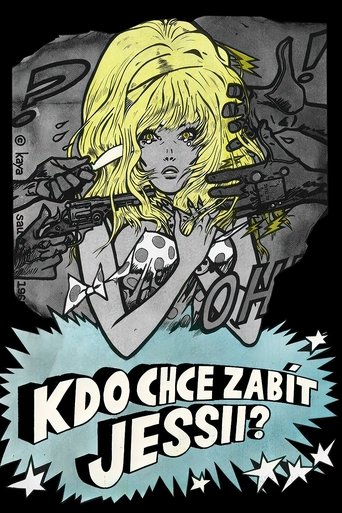
The lighter cinema of the same decade is just as rich. Lemonade Joe (1964), directed by Oldřich Lipský, is a western musical in which a clean-living hero defends an Arizona town with the help of a brand of lemonade; each scene is tinted a single colour, in the manner of silent films. The Hop-Pickers (1964) was the first Czech film musical, set among students sent to the hop harvest, and If a Thousand Clarinets (1965) imagines an army camp where every weapon turns into a musical instrument. Who Wants to Kill Jessie? (1966) is a comedy in which a scientist's invention brings the heroine of a comic strip to life, speech bubbles and all, and The Phantom of Morrisville (1966) is a send-up of English mystery stories. Ikarie XB 1 (1963), about a starship on a long voyage to another sun, is among the most influential science fiction films made in Europe.
Menzel, Hrabal and the village
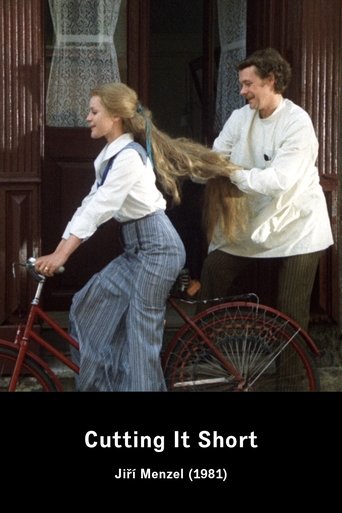
Jiří Menzel went on to become the best loved of Czech directors, and Bombuj has seven of his later films. Four are from the writings of Bohumil Hrabal. Cutting It Short (1981) is set in a small-town brewery before the First World War, where the manager's wife, Maryška, with her magnificent hair, her appetite and her bicycle, delights the town and alarms her careful husband; it is based on the courtship of Hrabal's own parents. The Snowdrop Festival (1984) is a chain of stories about the inhabitants of a settlement of weekend cottages in the forest, with their feuds, their hunting club and their bargains.
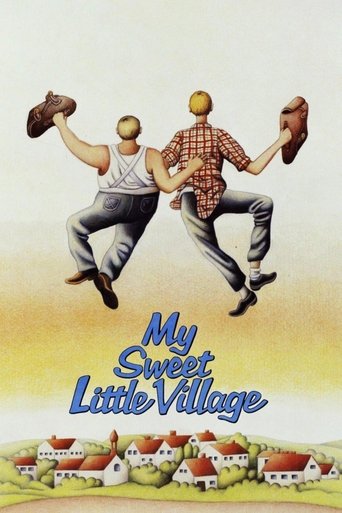
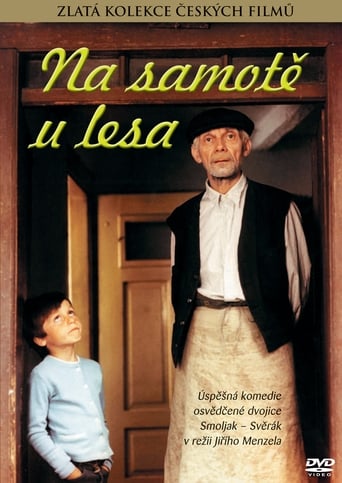
My Sweet Little Village (1985) was written by Zdeněk Svěrák and is the model of the Czech village comedy. Otík, a gentle young man who is slow at most things, works as mate to the lorry driver Pávek, his neighbour, who looks after him and is driven to distraction by him. Around them the life of the village goes on: the doctor who admires the landscape so much that he keeps crashing his car, the young vet, the man from Prague who has his eye on Otík's cottage. It was nominated for an Academy Award. Secluded, Near Woods (1976), also written by Svěrák with Ladislav Smoljak, is about a family from Prague who rent a country cottage for the summer on the understanding that its elderly owner is about to move out, and find that he means to stay.
Others by Menzel are Those Wonderful Movie Cranks (1979), a tribute to the travelling showmen who brought the first films to Bohemia, and The End of Old Times (1990), a comedy of a country estate in the first years of the republic. The Don Juans (2013), his last film, follows a small-town opera company. The village comedy continued in other hands: Sun, Hay, Strawberries (1984) and Sun, Hay and a Couple of Slaps (1989), directed by Zdeněk Troška in his own village in South Bohemia, are broad, noisy and hugely popular, and the three films about the Homolka family, Behold Homolka (1970), Hogo Fogo Homolka (1971) and Homolka and Pocketbook (1972), follow three generations of one household on their Sunday outings.
The comedies everyone quotes
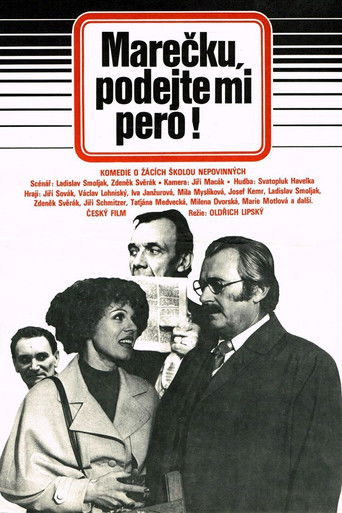
The 1970s and 1980s were lean years for serious cinema in Czechoslovakia, and a golden age for comedy. The films of that time are repeated on television every holiday, and whole conversations can be carried on in their lines. The writing partnership of Zdeněk Svěrák and Ladislav Smoljak is behind several of the best. Marecek, Pass Me the Pen! (1976), directed by Oldřich Lipský, sends a factory foreman of fifty back to evening classes for the school certificate he missed as a boy; he shares a bench with men of his own age, copies from the swot, and is taught by the same teacher who is giving his son a hard time by day. Joachim, Put It in the Machine (1974) is about a young mechanic who arrives in Prague with a computer-printed horoscope that tells him which days are safe, and has been given somebody else's.
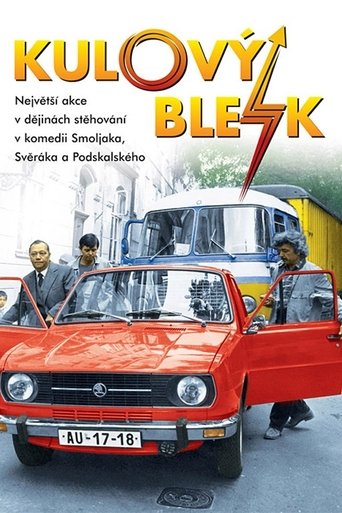
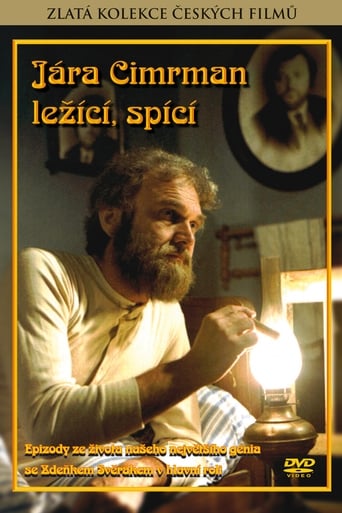
Ball Lightning (1979) turns on the most ambitious exchange of flats ever attempted: twelve households must all move on the same day, each into the home of the next, and the lawyer who has arranged it has to keep every one of them from changing their minds. Jára Cimrman Lying, Sleeping (1983) is a mock biography of the greatest Czech of the imagination, an inventor, playwright, explorer and teacher who narrowly missed every success; the character was created by Svěrák and Smoljak for their theatre, and was once voted the greatest Czech of all time before being disqualified for being imaginary.
Oldřich Lipský specialised in parody. The Mysterious Castle in the Carpathians (1981), from a novel by Jules Verne, sends an opera-singing count to a mountain castle where a mad inventor keeps his lost love preserved on film, with marvellous props by the animator Jan Švankmajer. A Nice Plate of Spinach (1977), by Václav Vorlíček, is about a machine that makes people younger and, when overused, a good deal smaller. Hearty Greetings from the Globe (1983) lets two visitors from another planet study human habits, and Do We Match Each Other, Darling? (1975) lets a computer assess a marriage. Miss Golem (1973) is a comedy of doubles set in the 1920s.
Others on the list are Men About Town (1969), in which three plasterers from the country, working in Prague, take lessons in polite behaviour before a night out; Summer with a Cowboy (1976), about a psychology student and a young shepherd; The Hit (1981), a musical comedy about the making of a musical; Let Him Face the Music! (1978); 'Okay, Boss...!' (1978); My Brother Has a Cute Brother (1975); Hubert the Smart Boy (1985); I'll Be Good, Old Man! (1979), in which a vain actor is sent to a spa for a strict cure; and Attention, Rounds! (1982), set on a hospital ward. How Poets Are Losing Their Illusions (1985) and How Poets Are Enjoying Their Lives (1988) follow a dreamy medical student named Štěpán from his first lectures to his first post as a doctor, and are the most popular entries in a series that has been running for forty years.
The oldest comedies in the catalogue star Jaroslav Marvan, the great character actor of mid-century Prague, as a grumbling ticket inspector named Anděl, which means angel. In Holiday with Angel (1953) he is sent on a works holiday against his will, and in Angel in the Mountains (1955) he goes skiing. Hudba z Marsu (1955) is a comedy about a factory band, and When the Woman Butts In (1960) updates the story of Faust to modern Prague.
The Svěráks, father and son
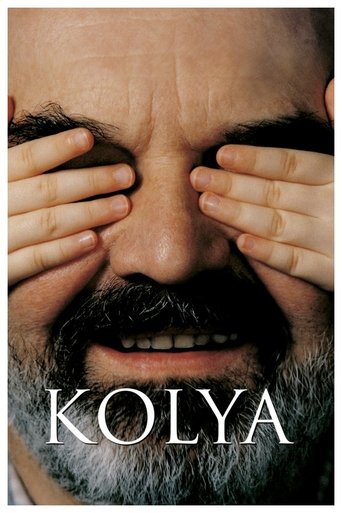
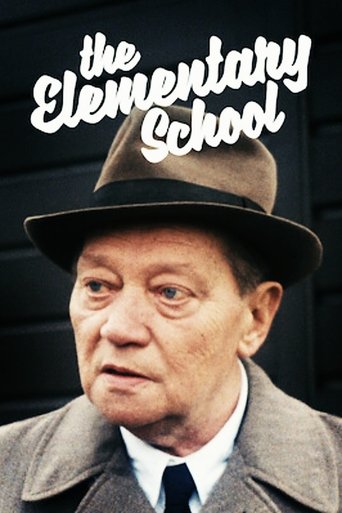
Zdeněk Svěrák, the writer and actor already mentioned, has made five films with his son Jan as director, and they form the most successful partnership in modern Czech cinema. The Elementary School (1991) is drawn from the father's own boyhood: in the first school year after 1945, a class of ungovernable boys in a village on the edge of Prague is taken over by a new teacher who wears riding boots and claims a heroic past. It was nominated for an Academy Award. Kolya (1996) won it. Louka, played by Svěrák senior, is a cellist of fifty-five who has lost his place in the orchestra and plays at funerals; to pay his debts he agrees to a marriage on paper with a Russian woman, who promptly leaves for the West, and he finds himself in charge of her five-year-old son. The film is set in the last year before 1989, and it is as funny as it is touching.
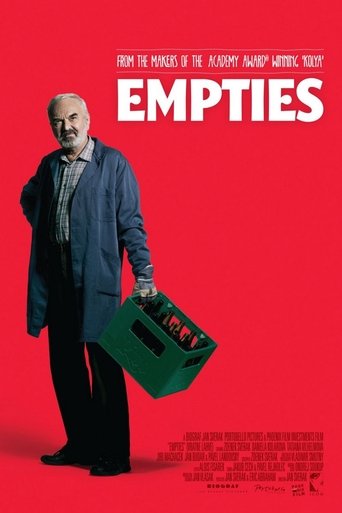
Empties (2007) casts Svěrák as a teacher who retires in a temper and takes a job at the bottle-return counter of a supermarket, where he becomes the confidant of the whole neighbourhood. Barefoot (2017) returns to the family of the first film a few years earlier, when the boy and his parents leave Prague for a village in the south. Bethlehem Light (2022) is about an elderly writer whose characters refuse to leave him alone. Jan Svěrák also directed Accumulator 1 (1994), a fantastic comedy about a man whose energy is being drained by his television set.
Hřebejk and the family comedy
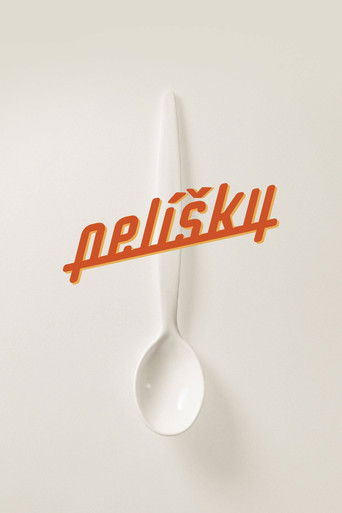
Jan Hřebejk and his regular writer Petr Jarchovský are the other great names of the past thirty years. Cosy Dens (1999) is their best-loved film, and for many Czechs the best film of its decade. Two families share a villa in Prague from the Christmas of 1967 to the summer of 1968: downstairs an army officer with firm views, upstairs a veteran of the wartime resistance with firm views of the opposite kind. The teenage son of one is in love with the daughter of the other. The fathers quarrel about everything, the mothers keep the peace, and unbreakable drinking glasses and plastic spoons from a friendly country play their parts. Big Beat (1993), the pair's first film, is a musical set in 1959, when a new boy brings rock and roll to a quiet district of Prague.
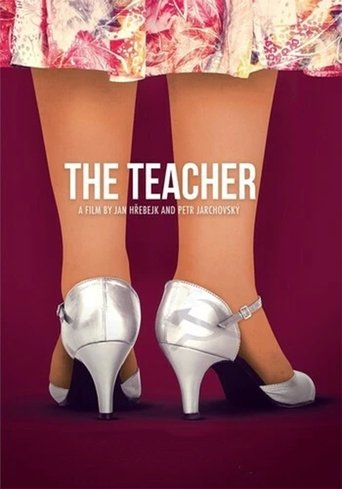
Pupendo (2003) is set in the early 1980s, in the household of a sculptor who is out of favour and makes his living from garden ornaments. Teddy Bear (2007) follows three old schoolfriends and their marriages, Kawasaki's Rose (2009) a respected doctor whose family learns something about his past, and Garden Store: Suitor (2017) a hairdresser's daughter and her fiancé in the late 1950s. The Teacher (2016) was made in Slovakia: in a Bratislava school in 1983, a new teacher asks each pupil on the first day what their parents do for a living, and it soon becomes clear why; the film is built around a meeting of parents called to decide whether to complain. Zuzana Mauréry won the best actress prize at Karlovy Vary for the part.
Comedies of today
Forty-six films have appeared since 2018, and comedy still leads. Owners (2019), written and directed by Jiří Havelka, takes place almost entirely in one room, at the annual meeting of the people who own the flats in an old Prague building. The roof leaks and the gas pipes need replacing; Mrs Zahrádková has prepared an agenda; and one by one the others, the man who objects to everything, the brothers who inherited a flat, the couple who rent theirs out, bring the meeting to a standstill. Anyone who has ever sat on a committee will recognise every face. Women on the Run (2019) is about a widow who decides to honour her husband's last wish by running a marathon in relay with her three daughters, of whom only one has ever run for a bus; it was the most popular Czech film of its year.
Emergency Situation (2022) is based on a real incident: the driver of a small country train gets out to fix a fault, and the train rolls away with its passengers. Bet on Friendship (2021) follows four men in their forties who make a wager that requires three of them to give up their comforts. What Men Want (2018) turns a magazine editor with firm views about women into a woman, and Madam President (2022) lets the first woman to lead the country slip out of the castle at night in a wig. Modern Father's Diary (2021), Stuck with a Perfect Woman (2016), The Good Plumber (2016), I Love You Heavenly (2017), Chalet for sale (2018), Holiday on Four Wheels (2024) and We're Going to Team Building (2023) are comedies of the same good-natured kind.
The romantic comedy has its own regulars. Jiří Vejdělek directed Women in Temptation (2010), about a marriage counsellor, her mother and her daughter, all single at once, Tender Waves (2013), about a shy boy from a family of swimmers and pianists, and The Last Aristocrat (2019), in which a family from New York inherits a castle in Bohemia together with its staff. From Subway with Love (2005), Out of the City (2000), in which a programmer and his small son discover the countryside, Fairy Tales for Emma (2016), LOVEhunt (2019), Way Home (2021) and A Christmas Story (2022) are further examples, and Waking Up Yesterday (2012) sends a teacher of forty back to his own school days in 1989 to say what he failed to say to a girl in his class.
Recent films with more weight include Winter Flies (2018), by Olmo Omerzu, in which two boys of fourteen and twelve drive across the country in a borrowed car in the middle of winter; it won the director's prize at Karlovy Vary. Family Film (2016), by the same director, The Gardener's Year (2024), about a couple who refuse to sell their garden, Ice Mother (2017), in which a widow of sixty-seven joins a club of winter swimmers, Tátova volha (2018), in which a mother and daughter set off in an old car to find out about the father's past, and Old Cans (2025) are all worth seeking out.
Slovakia
Twenty-five films are in Slovak, and they have a flavour of their own, a little wilder and closer to folk tale. The Garden (1995), by Martin Šulík, is the best known. Jakub, a teacher in his thirties whose life in the city has come to a stop, is sent by his father to sell his grandfather's old garden in the country. He stays instead, mends the house, reads his grandfather's diary written backwards, and is visited by a series of odd callers, among them a girl who is said to work small miracles. It is a gentle, funny and mysterious film, and it won prizes across Europe. Šulík also made Everything I Like (1993) and Piece of land (2000), ten short stories from a century of Slovak history.
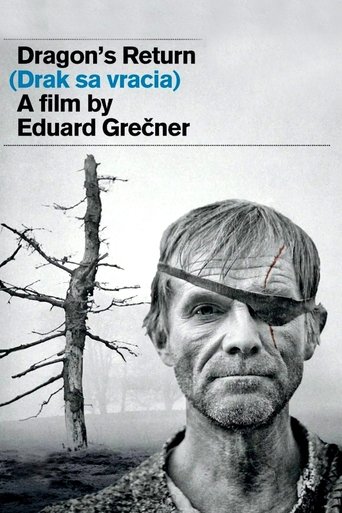
The Slovak cinema of the 1960s is represented by The Prime of Life (1967), the first feature of Juraj Jakubisko, about a painter who is nearly thirty-three and feels that he ought to have decided something by now; by Dragon's Return (1968), a ballad of a potter in a mountain village; and by Celebration in the Botanical Garden (1969), a colourful fantasy of a wine-growing village waiting for a miracle. Sweet Games of Late Summer (1970) and Rose Tinted Dreams (1977), a tender romance between a young postman and a Roma girl, belong to the following decade, and Pacho, the Brigand of Hybe (1976) is a comic version of the legend of the Slovak outlaw hero.
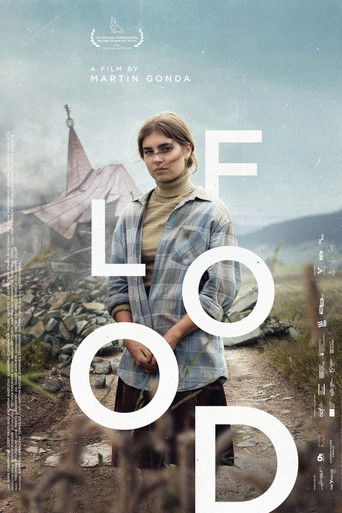
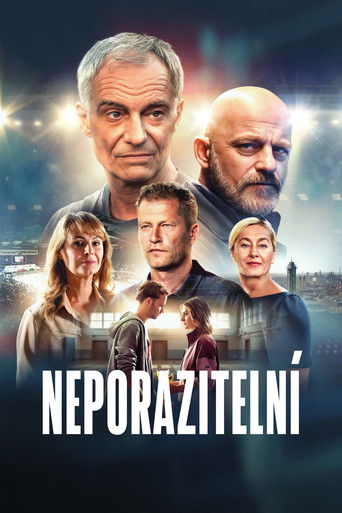
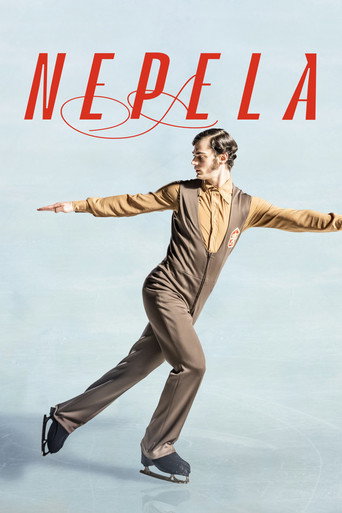
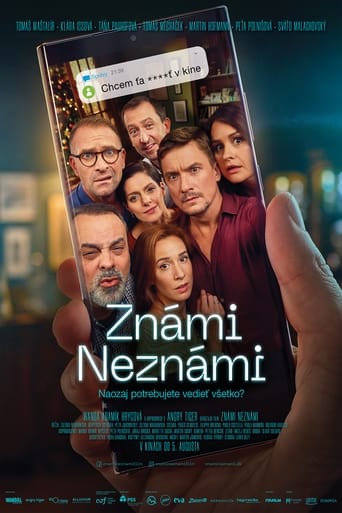
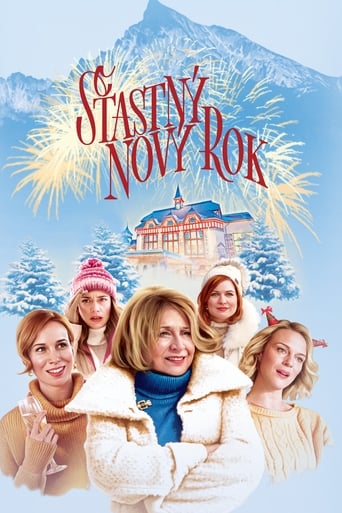
The oldest Slovak films here are Katka (1950), about a country girl who goes to work in a factory, and Homeland (1954), a celebration of folk song and dance that was the first Slovak film in colour. Among the newest are Little Harbour (2017), about a girl of ten who decides to look after two abandoned babies in a garden shed, which won the Crystal Bear at Berlin; Nina (2017), about a young swimmer whose parents are separating; Nepela (2025), about the figure skater Ondrej Nepela; Flood (2025); and the comedies Happy New Year (2019), Far Too Personal (2020), Réveillon (2023) and Známi neznámi (2021), in which friends at a dinner agree to share every message that arrives on their telephones.
Fantasy, fairy tales and Karel Zeman
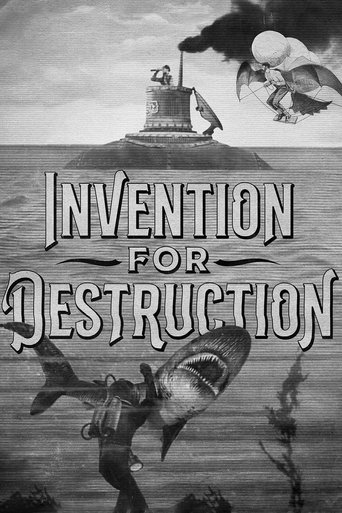
Czech cinema has a long tradition of the fantastic, and its greatest master was Karel Zeman, who combined live actors with drawings, models and puppets in ways that film-makers still study. The Fabulous World of Jules Verne (1958) has a look entirely its own: every frame is designed to resemble the steel engravings in the first editions of Verne's novels, with lines ruled across the sea and the sky, and through this world of airships and submarines an inventor is carried off by a gentleman pirate. The Jester's Tale (1964) follows a ploughboy, a soldier and a clever girl through the wars of the seventeenth century in the style of old prints, and On the Comet (1970) carries a piece of North Africa, with its garrison and its quarrels, off into space.
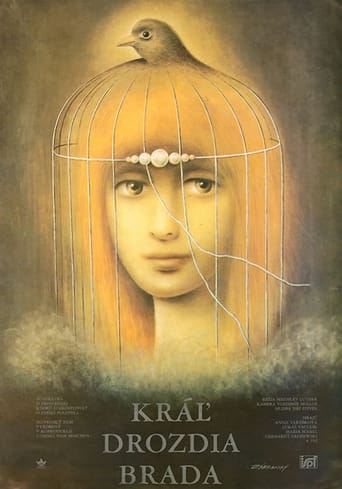
The fairy-tale film is a national institution, shown every Christmas, and three are in the catalogue. The Third Prince (1983) tells of twin princes and a princess imprisoned on the Diamond Rocks, with Libuše Šafránková, the favourite princess of two generations. King Thrushbeard (1984), made in Slovakia, is the story of a proud princess who mocks every suitor and is married to a wandering singer, and The Frog Prince (1991) is a version of the famous tale for German and Czech television. Legend Of The Flying Cyprian (2010) is a Slovak historical adventure about a monk of the eighteenth century who was said to have built a flying machine.
Science fiction is represented by Ikarie XB 1 and by the gentler comedies already described. Unexpected Encounters (1994) is a late example, about an expedition to an apparently empty planet, and Meeting in July (1978) and Špindl (2017) are lighter films that the family lists share with this one.
Musicals and music
Twenty-three films are built around music. A Night at Karlstein (1974) is the favourite Czech musical: by order of the emperor Charles IV, women are forbidden to spend the night in his castle of Karlštejn, and on one evening in the fourteenth century two of them, the empress and a young bride, find their way in disguised. The songs are known to everyone. The Hop-Pickers brought the electric guitar to the Czech screen, and Big Beat recalls the arrival of rock and roll. 30 Maidens and Pythagoras (1977) is a school musical, Discopříběh (1987) a teenage romance set to the pop music of its day, and The Smoke (1991) a rhythmic comedy about a young engineer in a factory, described by its director as a musical of the totalitarian age.
More recent are Muzzikanti (2017), a story of musicians from the borderland between Czechia, Slovakia and Poland, and Backstage (2018), a Slovak dance film. Intimate Lighting belongs here too, since its heroes are musicians and its best scene is a string quartet played, with interruptions, in a sitting room.
Sport
Sixteen films are about sport, and the best of them are true stories. Zátopek (2021) is the life of Emil Zátopek, the runner who won the five thousand metres, the ten thousand metres and the marathon at the Olympic Games of 1952, a feat that has still to be repeated, and of his wife Dana, who won the javelin on the same afternoon. The film is framed by a visit from the Australian runner Ron Clarke in 1968. The Last Race (2022) recalls a ski race in the Giant Mountains in 1913, in which the champion Bohumil Hanč was caught by a sudden storm and a friend went out to look for him. Fair Play (2014) is about a young sprinter in the 1980s and the pressure put on her to take what her coaches call vitamins.
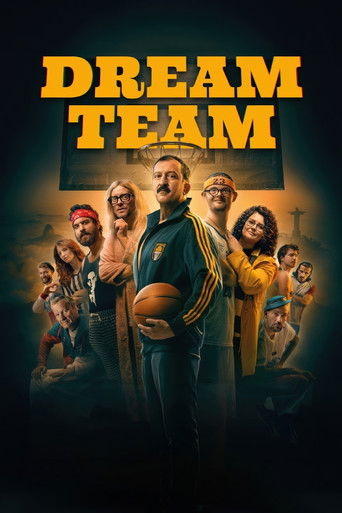
Lighter are Chasing Fifty (2015), a comedy of a family of cross-country skiers and a famous fifty-kilometre race, Přes prsty (2019), set among beach volleyball players, Okresní přebor – Poslední zápas Pepika Hnátka (2012), about a village football club mourning its trainer, and Dream Team (2026), about a coach whose son dreams of playing basketball. Invincibles (2025) tells of a national team that surprised everyone, and Sněženky a machři po 25 letech (2008) reunites, a quarter of a century later, the classmates of a celebrated comedy about a school skiing course.
Dramas
Seventy-three films are dramas, and several rank with the best work of their directors. Bohdan Sláma has three films here. Something Like Happiness (2005) is set on a housing estate in an industrial town in the north, where three friends who grew up together, a shop assistant, a young man who lives with his aunt in a tumbledown farmhouse, and a mother overwhelmed by her life, look after two small boys between them. It won the Golden Shell at San Sebastián. The Country Teacher (2008) follows a gifted science teacher who leaves a Prague grammar school for a village and befriends a woman farmer and her teenage son, and Ice Mother has already been mentioned.
The past is seen through private lives. Talks with TGM (2018) imagines one morning in 1928 when the writer Karel Čapek and the first president of Czechoslovakia, Tomáš Masaryk, walk in a park and argue about a book they have written together. Toman (2018) is the story of a man who ran the state film industry after 1945, and Love Between the Raindrops (1980) is a family chronicle of a Prague shoemaker and his children in the 1930s. Saturnin (1994), from the most popular Czech comic novel of the century, is about a young man who engages a manservant with a taste for adventure and a gift for dealing with tiresome relatives; it is a drama only in the sense that the aunt is truly formidable.
Films about the young include Searching (1966), Waiting for the Rain (1978), about a girl left alone in the city through a hot summer, Sestricky (1984), about a nurse in her first post, Indian Summer (1995), Cool Girl! (2023) and After Party (2024). Droneman (2020), Bird Atlas (2021), about the ageing owner of a company and his children, Sea of Hope (2025), about a violin maker, and The City of the Sun (2005), in which four men who have lost their jobs in Ostrava go into business with an old lorry, are stories of work. Wrong Side Up (2005), from a play by Petr Zelenka, is a comedy of quiet desperation about a cargo handler at an airport and his eccentric parents.
Faces to follow
Czech films are made by a small company of actors who appear again and again, and a viewer soon comes to know them. Rudolf Hrušínský, with his heavy face and perfect timing, is the doctor in My Sweet Little Village and one of the three friends in Capricious Summer; his son and grandson, both actors of the same name, turn up in later films. Josef Abrhám is in Marecek, Pass Me the Pen! and Ball Lightning, Jiří Sovák in Marecek, Pass Me the Pen! and Men About Town, and Luděk Sobota in Joachim, Put It in the Machine and 'Okay, Boss...!'. Zdeněk Svěrák acts in most of the films he writes.
Among actors of the present, Bolek Polívka leads Pupendo and appears in Cosy Dens; Ivan Trojan is in Teddy Bear and Wrong Side Up; Aňa Geislerová is in Something Like Happiness and Madam President; and Tereza Ramba, Jiří Langmajer and Zlata Adamovská appear in many of the newer comedies. Zuzana Kronerová, from a famous Slovak acting family, is the grandmother of Ice Mother and has a part in The Teacher.
Directors are the surest guide. Oldřich Lipský made Lemonade Joe, Joachim, Put It in the Machine, Marecek, Pass Me the Pen! and The Mysterious Castle in the Carpathians; Zdeněk Podskalský Men About Town, A Night at Karlstein and The Hit; and Václav Vorlíček Who Wants to Kill Jessie? and A Nice Plate of Spinach. Menzel, Forman, Chytilová, the Svěráks, Hřebejk, Sláma and Šulík have been described above, and a viewer who enjoys one film by any of them can safely try the rest.
A first month
A newcomer could spend a first month with Bombuj as follows. In the first week watch Kolya, which was made to travel, and My Sweet Little Village. In the second week take two comedies of the 1970s, Marecek, Pass Me the Pen! and Secluded, Near Woods. In the third week go back to the New Wave with Loves of a Blonde and The Firemen's Ball, which are both short. In the fourth, watch Cosy Dens and Owners. That makes eight films across sixty years, and by the end the lists of comedy, classics and the New Wave will each have a familiar landmark.
Households with children can follow a different path. The Third Prince, King Thrushbeard, The Fabulous World of Jules Verne, On the Comet, Lemonade Joe, The Mysterious Castle in the Carpathians and A Night at Karlstein are all suitable for viewers from about eight years old, and The Elementary School, Barefoot and Zátopek are good choices for a family with older children.
Sixty years in brief
A little history helps in reading these films. After 1948 the film industry of Czechoslovakia belonged to the state, which paid for the studios at Barrandov in Prague and Koliba in Bratislava and for an excellent film school. In the 1950s that system produced careful, cheerful films such as the two Angel comedies. In the 1960s, as the country grew freer, it produced the New Wave. After the summer of 1968 many of the best directors left or were kept from working, several of their films were locked away for twenty years, and popular comedy became the safest and liveliest form; the humour of those years is often about small liberties, a cottage, a car, a clever way round a rule.
The two countries separated peacefully at the start of 1993, and their cinemas have remained close ever since: actors and crews cross the border freely, many films are made together, and audiences on each side know the other's stars. Since the 1990s films have been paid for by a mixture of public funds, television and private producers, and the range is wider than it has ever been, from broad comedies that fill the multiplexes to small films that win prizes at Karlovy Vary, the festival in the spa town of western Bohemia that has been held since 1946.
The cottage and the weekend
One custom explains a good deal about these films. From the 1960s onward a large part of the Czech and Slovak population acquired a second home in the country, a cottage, a wooden cabin or an old farmhouse, and spent every weekend there, digging, building and visiting the neighbours. The habit is called chalupaření, and it runs through the national cinema. Secluded, Near Woods is its classic comedy, The Snowdrop Festival its affectionate portrait, and Chalet for sale and The Gardener's Year its recent echoes. The Homolka films are about the other kind of weekend, the family outing by car that everyone dreads and nobody will cancel.
The village itself is seen with equal fondness. It has a pub, a football pitch, a volunteer fire brigade and a brass band, and at least one inhabitant who has worked out a way of doing less than is expected of him. The Firemen's Ball, My Sweet Little Village and Sun, Hay, Strawberries are set in three such villages twenty years apart, and the fire brigade, the lorry and the gossip have hardly changed. Old Gossiptown 3 (2015) and Srdce na dlani (2022) show that the form is alive.
Watching with subtitles
The classics of the 1960s have long been available with English subtitles, and the newer films usually are; for the popular comedies of the 1970s and 1980s it is worth checking the languages listed by each service. Czech and Slovak are so close that speakers of one follow the other with ease, and for decades television in the common state mixed the two. Much of the humour is verbal, and translators have to work hard, but the situations are clear and the faces say a great deal.
Titles are listed under their English release name where one exists and under the original otherwise, so that Známi neznámi, Přes prsty and Tátova volha keep their own names. The search recognises both forms, and typing Pelíšky will find Cosy Dens just as surely as typing the English title. The original title is shown under the English one on every film page.
How the films were chosen
The catalogue began with a search of TMDB for feature films whose original language is Czech or Slovak. That search returned close to six hundred titles. Animated films and puppet films, which have guides of their own, were set aside, as were thrillers, horror films, crime stories and films of armed conflict, and the remainder was read through by hand, story by story and poster by poster. An automatic filter had rejected a number of well-known comedies for single harmless words in their descriptions, and fifty of these were restored after a second reading. Films made for adult audiences were removed, as were the coarser comedies, and 184 remained.
A few of the films kept are serious works best suited to older teenagers and adults: The Party and the Guests, Something Like Happiness, Kawasaki's Rose, Little Harbour and Fair Play among them. The descriptions on their pages make the tone clear. Every title on Bombuj is unique to this guide among its sister sites. Scores, cast lists and descriptions come from TMDB, and the Watch now links are provided by JustWatch, which records where each film is officially available country by country.
Using Bombuj
Search is the quickest route to a film whose name you know. Begin to type in the quick-search field at the right of the menu bar and matches appear under it at once, each with its year. The Films page lists the whole catalogue with the most popular titles first, and the A-Z page sets all 184 in alphabetical order, one letter to a page. The grey bars on the home page are a good way to wander, and the All link at the end of each opens its full list.
My List collects the films you want to return to. The button is on every film page, beside Watch now, and the list itself opens from the strip at the very top of the site. Because the list is written to your own browser, Bombuj needs neither a registration nor a password; the films stay listed on that device until you remove them, and a single button saves them to a file for use elsewhere. A set of the holiday comedies, gathered in advance, is a popular use in December.
The help pages explain each part of the site in a few lines. How to watch describes the path from a poster to an official service, Finding titles covers the search and the lists, and My List explains the list. There are short guides to comedy, the New Wave, the classics, Slovakia, village films, drama, family films, music, sport, fantasy and fairy tales and new films, and a page that goes year by year.
Questions and answers
Questions
What is Bombuj?
Bombuj is a guide to 184 Czech and Slovak films, made between 1950 and 2026 and chosen for the whole household. Each film page gives the story, year, director and cast, and a Watch now button that leads to the official services carrying the film in your country.
Which film should I watch first?
Start with Kolya, Cosy Dens or My Sweet Little Village. The first-month plan in the guide suggests an order for eight films.
Is the catalogue suitable for families?
Yes. Every film was screened by hand, and the selection keeps to comedies, village stories, musicals, family films and fairy tales. A few serious films are best for older teenagers and adults, as the guide explains.
What is the Czechoslovak New Wave?
It is the name given to the films made by a group of young directors between about 1963 and 1969, among them Miloš Forman, Jiří Menzel and Věra Chytilová. Thirty films from that decade have a list of their own.
Are there Slovak films?
Yes. Twenty-five films are in Slovak, from Katka in 1950 to The Teacher and Nepela.
Are the films subtitled in English?
The classics and most recent films are. For the popular comedies of the 1970s and 1980s, check the languages listed by each service.
How does My List work?
Press Add to My List on any film page. The list is kept by your own browser, free of charge, and can be saved as a file.
Does Bombuj host films or downloads?
Bombuj is a guide only. Every Watch now button leads to an official, licensed service.